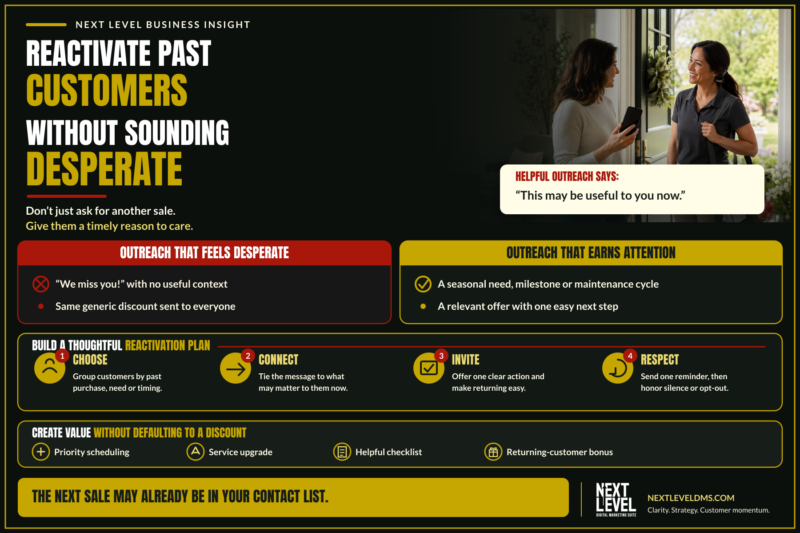
Small-business owners often spend most of their marketing energy trying to reach strangers. Meanwhile, past customers who already know the business may simply need a relevant reason to return. Reconnecting can feel uncomfortable, especially if months have passed and the only message that comes to mind is, “Are you ready to buy again?”
That hesitation makes sense. Nobody wants to sound needy or transactional. The answer is not to avoid past customers; it is to approach them with relevance, helpfulness, and respect. This matters because the second sale can be more valuable than the first.
Why Customer Reactivation Messages Feel Awkward
Imagine a residential cleaning company with hundreds of people who booked once or twice but never became recurring customers. The owner knows that reactivating even a small percentage could create meaningful revenue. Still, a generic discount email feels desperate because it gives the customer no context beyond the company wanting another sale.
Effective customer reactivation begins with the customer’s world. What has changed since the last purchase? Is there a seasonal need, an upcoming milestone, a maintenance cycle, a new service, or a common problem worth addressing? A timely reason transforms the outreach from “Please buy” into “This may be useful now.”
Lead With Relevance, Not Pressure
The cleaning company could promote a spring reset, a post-holiday deep clean, or preparation for graduation and family gatherings. It could share a short checklist explaining when a home may need more than a routine cleaning. It might give former customers early access to a limited number of recurring-service openings.
Each message connects the offer to a real situation. The customer can quickly understand why the business is reaching out and decide whether the timing fits.
Build a Simple Win-Back Campaign
Start by segmenting past customers. Separate recent buyers from people who have been inactive for six months, a year, or longer. If possible, group them by service, purchase history, or likely need. A relevant message will outperform one generic blast.
Next, create a short sequence. The first message can offer a helpful reminder or resource. The second can introduce a timely service or customer story. The third can make a clear offer with an honest deadline. Keep the tone warm, acknowledge the existing relationship, and provide an easy way to unsubscribe.
Use more than discounts. Priority scheduling, a service upgrade, a returning-customer bonus, or useful information can create value without training people to wait for lower prices. If you do offer an incentive, protect your margins and connect it to a specific action. Priority scheduling, helpful resources, and service upgrades can add meaningful value without lowering your price.
The Next Sale May Already Be in Your Contact List
Measure replies, bookings, purchases, and unsubscribes—not just opens. The goal is to learn which customers still have a need and which messages earn renewed attention. Respect silence and avoid sending the same sales message indefinitely.
Choose 20 past customers this week and ask what would be genuinely useful to them now. Then write one message around that need. You are not starting a relationship from zero; you are continuing a relationship your business already earned.
What’s Next?
Need a reactivation campaign that sounds like your brand? Next Level DMS can help you connect customer insight, thoughtful messaging, and automated follow-up into a repeatable retention system.