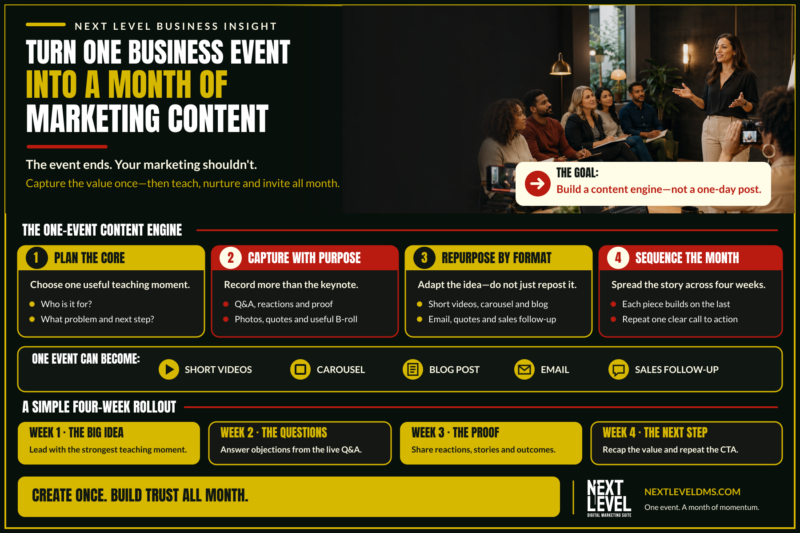
A workshop, webinar, panel, or community event can take weeks to plan. You choose the subject, organize your expertise, build slides, promote the session, and prepare for audience questions. Then the event ends, the recording goes into a folder, and the marketing value disappears after one hour.
That is a missed opportunity. Your event is not a single piece of content. It is a source of stories, lessons, questions, visuals, and customer insight that can support a full month of marketing.
Start With One Valuable Teaching Moment
Imagine a financial advisor delivering a cash-flow workshop for local business owners. The presentation includes five common cash-flow mistakes, a planning worksheet, two client examples, and a lively question-and-answer session. Each part can become content for a different channel and audience need. Your strongest teaching moments can become content that prepares prospects to buy.
The key is to repurpose the idea, not simply repost the same recording everywhere. A person scrolling through social media needs a different experience than someone reading an in-depth article or opening a follow-up email.
Build Your Event Content Map
Begin with the central promise of the event. What should attendees understand or do differently? Turn that promise into one longer blog that captures the main lesson and links to a relevant next step.
Next, identify the strongest teaching points. Each can become a 45- to 90-second video with one clear takeaway. Pull concise insights from those videos for quote graphics, carousel posts, or text-only social content.
Use audience questions to create an FAQ, follow-up email, or future video series. Questions are especially valuable because they reveal what real prospects find confusing, risky, or important. A thoughtful answer may attract people who never attended the original event.
Finally, turn the worksheet or framework into a downloadable checklist, scorecard, or guide. That resource can capture leads and continue the conversation beyond the event.
Plan Distribution Before the Event Begins
Repurposing becomes easier when you prepare for it. Record clean audio and video, capture photographs, save the slides, collect audience questions, and ask permission before featuring attendees. Assign someone to mark strong moments or note timestamps during the session.
Then schedule the content in a logical sequence. Week one can recap the central insight. Week two can explore common mistakes. Week three can answer audience questions. Week four can share a customer example and invite the audience to download a resource or schedule a conversation.
Every piece should connect to the same strategic goal. If the event is meant to generate consultations, do not end the repurposed content with vague engagement requests alone. A clear next step helps move people beyond views and toward inquiries.
Create Less From Scratch—Use More of What You Know
Content repurposing is not lazy. It respects the effort required to develop a valuable idea and gives people multiple ways to learn it. Repetition also helps your audience remember the message; most people will not see every post you publish.
Before planning a brand-new topic, revisit your last presentation. Can it produce five videos, three posts, one email, one article, and one useful download?
What’s Next?
Next Level DMS helps small businesses turn scattered ideas into organized content systems. Save this article, choose one past event, and build your first content map today.