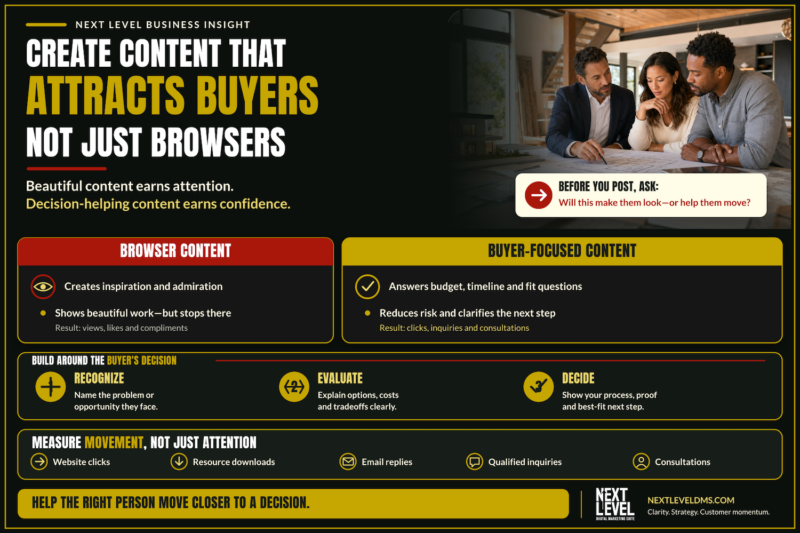
Your content may be getting views, likes, and compliments while producing very few serious inquiries. That can be discouraging. You are investing time in social media, photography, video, or blog writing, yet the people engaging with the content are not becoming customers.
The issue may not be content quality. It may be content intent. Some posts are designed to make people stop and look. Buyer-focused content goes further: it helps the right person understand a problem, evaluate options, and feel more prepared to make a decision. Understanding why some content earns attention but not inquiries is the first step toward attracting more serious buyers.
Beautiful Content Can Still Attract the Wrong Attention
Imagine a custom home builder who shares polished project photos and cinematic tours. The homes look impressive, and the posts earn strong engagement. But qualified inquiries remain low because the content mainly creates inspiration. It does not answer the practical questions serious buyers ask before beginning a major project.
Browsers want ideas. Buyers need confidence. A prospective client may wonder whether they can afford the project, how long it will take, which decisions must be made first, and how to avoid expensive mistakes. If your content never addresses those concerns, the audience may admire your work without moving closer to hiring you.
Build Content Around Customer Decisions
Start by listing the questions customers ask before they buy. Pay attention to consultation calls, emails, comments, proposals, and objections. Those conversations reveal the information people need to move forward.
Then organize topics around three stages. Early-stage content helps prospects recognize a problem or opportunity. Middle-stage content explains possible approaches and what to consider. Decision-stage content clarifies your process, pricing factors, expected timeline, and what makes someone a good fit.
For the home builder, useful topics might include “Five Costs People Forget When Planning a Custom Home,” “How to Choose Between Renovating and Building,” or “What Happens During the First 90 Days of a New-Build Project.” Each topic attracts people with stronger intent than a general photo tour alone. Answering these questions also explains why educational content can shorten the sales cycle.
Use Proof to Turn Information Into Trust
Helpful advice demonstrates expertise, but proof makes that expertise believable. Add customer stories, before-and-after examples, lessons from completed projects, and honest explanations of tradeoffs. Show how your process helped a real customer avoid a problem or reach a meaningful outcome.
You should still share beautiful, entertaining, or inspirational content. It builds awareness and gives your brand personality. The key is balance. Connect attention-generating posts to decision-helping resources through clear captions, internal links, downloadable guides, email invitations, or consultation calls to action.
Measure Movement, Not Just Attention
A strong content strategy is not judged only by reach. Track profile visits, website clicks, resource downloads, email replies, qualified inquiries, and consultations. Those actions reveal whether your content is creating customer momentum.
Before publishing your next post, ask: will this simply make someone look, or will it help the right person move? When your content answers real buying questions, it becomes more than promotion. It becomes a trusted part of the customer’s decision.
What’s Next?
Follow Next Level DMS for practical ways to turn your expertise into content that attracts, educates, and converts better-fit customers.