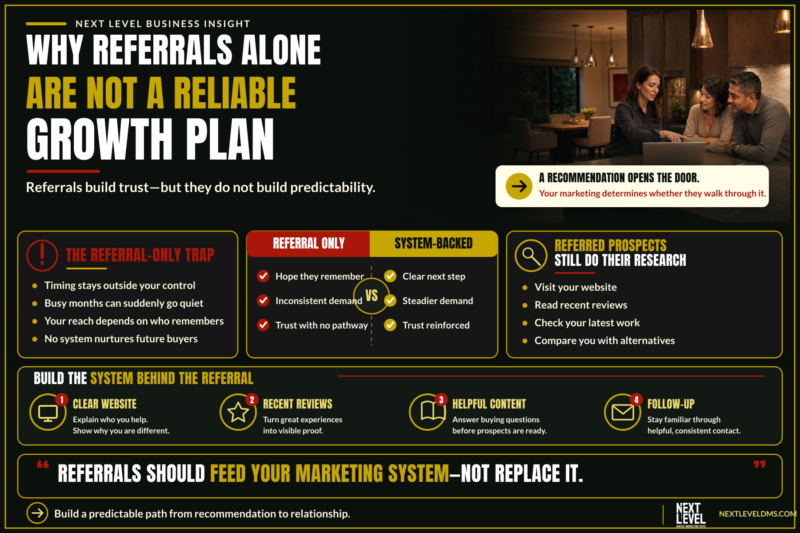
Referrals are one of the strongest signals a small business can receive. They mean someone trusted your work enough to recommend you. That kind of credibility is worth protecting. But if referrals are your only source of new business, growth can become unpredictable—and stressful.
Many capable owners experience the same pattern: one month is packed, the next is quiet, and nobody knows when the next opportunity will arrive. The business has earned a good reputation, but it has not built a reliable system for turning that reputation into consistent demand.
Why Word of Mouth Eventually Hits a Ceiling
Consider a home remodeler who gets most of his projects through former customers. He does excellent work, and homeowners gladly share his name. Still, referrals depend on other people remembering him at the exact moment someone in their circle needs a contractor. That timing is outside his control.
Referred prospects also do more research than many owners realize. Before calling, they may visit the company’s website, read reviews, check recent projects, and compare several competitors. A recommendation opens the door, but the rest of the marketing experience determines whether the prospect walks through it.
Build a System Around the Referral
A dependable referral marketing strategy supports word of mouth at every stage. Start with a website that immediately explains who you help, what problem you solve, and why your approach is different. Make it easy for a referred visitor to confirm that they are in the right place.
Next, create a consistent review process. Positive reviews provide visible proof that the recommendation was not an isolated experience. They also help prospects understand what customers appreciate most about working with you.
Then stay connected with past customers. A helpful email, seasonal reminder, customer story, or maintenance tip keeps your business familiar without constantly asking for another sale. When a new need or referral opportunity appears, your name is easier to recall.
Create Demand Before Someone Is Ready to Buy
Educational content gives your business another growth path. The remodeler could answer questions about renovation budgets, contractor selection, realistic timelines, permits, or common planning mistakes. That content can attract homeowners who are researching now but may not request an estimate for several months.
This is how a small-business marketing system creates momentum: content attracts attention, a useful resource captures interest, email follow-up builds trust, and a clear call to action helps the prospect move forward. Referrals can enter the same system and receive the reassurance they need.
Keep the Trust—Reduce the Uncertainty
Growing beyond referrals does not mean abandoning what works. It means building an engine around the trust you have already earned. Your referrals become more likely to convert, while your website, content, reviews, and follow-up create additional ways for qualified customers to find you.
What’s Next?
If your revenue still depends on people remembering your name, start with one question: what happens after someone hears about your business? Next Level DMS can help you turn that answer into a clearer, more consistent path from recommendation to relationship.